
Additional Information
Book Details
Abstract
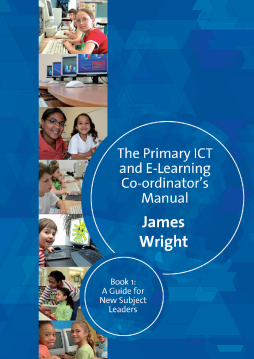
Every primary school has the daunting task of embedding ICT and E- Learning into their curriculum. This practical manual is the first part of a 2-volume set that together makes up a detailed 2-year training programme for primary ICT and E-learning co-ordinators. The books combine key strategies and information with a weblog discussion from a group of 'virtual' co-ordinators who share their problems, fears and successes over the two-year programme, based on the author's wide experience of working with new co-ordinators and experienced staff on training programmes and in general support. Book 1 is designed specifically for co-ordinators new to the role who need starting points and broad support. It presents a structured training programme split over three terms, guiding co-ordinators through the key stages of developing and implementing ICT policy and practice, including: o auditing existing school systems. o reviewing and revising the school policy for ICT. o reviewing the ways in which ICT is used as a teaching and learning tool across the curriculum. o examining methods for the management of technical support services. o establishing a clear overview of standards in ICT, including a review of assessment procedures, moderating work, monitoring teaching and learning and creating E Portfolios. The books have a companion website, which will offer downloadable versions of the photocopiable sheets from the book, as well as links to other sources of help and advice.
Table of Contents
| Section Title | Page | Action | Price |
|---|---|---|---|
| 1. Introduction: integrating vulnerable people into financial and market systems | |||
| Linda Jones | |||
| 2. The G2P opportunity: five reasons why now is the time to leverage social protection to enable financial inclusion and savings among the poorest | |||
| Jamie M. Zimmerman and Jamie Holmes | |||
| 3. Myths, misconceptions, and the emerging truth in serving very poor households: Grameen Foundation's experience to date | |||
| Kate Druschel Griffin and Malini Tolat | |||
| 4. Inclusive microfinance: reaching disabled people through partnership development | |||
| Anne Leymat | |||
| 5. Barriers to microcredit for disabled persons: evidence from economically active persons in Uganda | |||
| Leif Atle Beisland and Roy Mersland | |||
| 6. Value chain development for rural poverty reduction: a reality check and a warning | |||
| Dietmar Stoian, Jason Donovan, John Fisk and Michelle F. Muldoon | |||
| 7. Catalysts of agricultural supply markets: the case for smart subsidies in Zambia | |||
| Alexandra Snelgrove and Lemme Manje | |||
| 8. Bringing together push and pull through local entrepreneurs: case study From Tanzania Sally Walkerman | |||
| 9. Making markets work for women: how push and pull strategies can support women's economic empowerment | |||
| Christine Faveri | |||
| 10. Whose vision counts? The formulation of vision in community forest enterprises | |||
| Hiroyuki Tanaka | |||
| 11. Can the poorest be helped by any of our current models of economic development? | |||
| Ben Fowler and Linda Jones | |||
| 12. Conclusions: the way ahead for including the poorest |