
Additional Information
Book Details
Abstract
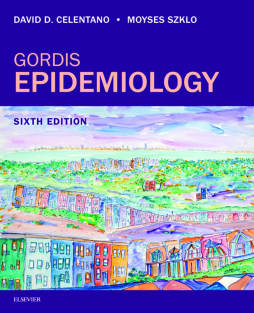
From the Department of Epidemiology at Johns Hopkins University and continuing in the tradition of award-winning educator and epidemiologist Dr. Leon Gordis, comes the fully revised 6th Edition of Gordis Epidemiology. This bestselling text provides a solid introduction to basic epidemiologic principles as well as practical applications in public health and clinical practice, highlighted by real-world examples throughout. New coverage includes expanded information on genetic epidemiology, epidemiology and public policy, and ethical and professional issues in epidemiology, providing a strong basis for understanding the role and importance of epidemiology in today’s data-driven society.
- Covers the basic principles and concepts of epidemiology in a clear, uniquely memorable way, using a wealth of full-color figures, graphs, charts, and cartoons to help you understand and retain key information.
- Reflects how epidemiology is practiced today, with a new chapter organization progressing from observation and developing hypotheses to data collection and analyses.
- Features new end-of-chapter questions for quick self-assessment, and a glossary of genetic terminology.
- Provides more than 200 additional multiple-choice epidemiology self-assessment questions online.
- Evolve Instructor Resources, including a downloadable image and test bank, are available to instructors through their Elsevier sales rep or via request at: https://evolve.elsevier.com
Table of Contents
| Section Title | Page | Action | Price |
|---|---|---|---|
| Front Cover | cover | ||
| Inside Front Cover | ifc1 | ||
| Half title page | i | ||
| Note to Instructors | ii | ||
| Gordis Epidemiology | iii | ||
| Copyright Page | iv | ||
| In Memoriam | v | ||
| Preface | vi | ||
| Acknowledgments | ix | ||
| Table Of Contents | xi | ||
| I The Epidemiologic Approach to Disease and Intervention | 1 | ||
| 1 Introduction | 2 | ||
| What Is Epidemiology? | 2 | ||
| Objectives of Epidemiology | 2 | ||
| Changing Patterns of Community Health Problems | 3 | ||
| Epidemiology and Prevention | 5 | ||
| Primary, Secondary, and Tertiary Prevention | 6 | ||
| Two Approaches to Prevention: a Different View | 6 | ||
| Epidemiology and Clinical Practice | 7 | ||
| Epidemiologic Approach | 7 | ||
| From Observations to Preventive Actions | 9 | ||
| Ignáz Semmelweis and Childbed Fever | 9 | ||
| Edward Jenner and Smallpox | 12 | ||
| John Snow and Cholera | 14 | ||
| When the Frequency of a Disease Declines, Who Deserves the Credit? | 16 | ||
| Integrating Prevention and Treatment | 18 | ||
| Conclusion | 19 | ||
| References | 19 | ||
| 2 The Dynamics of Disease Transmission | 20 | ||
| Learning Objectives | 20 | ||
| Modes of Transmission | 20 | ||
| Clinical and Subclinical Disease | 21 | ||
| Clinical Disease | 23 | ||
| Nonclinical (Inapparent) Disease | 23 | ||
| Carrier Status | 23 | ||
| Endemic, Epidemic, and Pandemic | 23 | ||
| Disease Outbreaks | 26 | ||
| Immunity and Susceptibility | 26 | ||
| Herd Immunity | 27 | ||
| Incubation Period | 28 | ||
| Attack Rate | 32 | ||
| Exploring Occurrence of Disease | 32 | ||
| WHO | 32 | ||
| Gonorrhea | 32 | ||
| Pertussis | 32 | ||
| When | 34 | ||
| Where | 35 | ||
| Outbreak Investigation | 36 | ||
| Cross-Tabulation | 36 | ||
| Conclusion | 38 | ||
| References | 39 | ||
| Review Questions for Chapter 2 | 39 | ||
| 3 The Occurrence of Disease | 41 | ||
| Learning Objectives | 41 | ||
| Surveillance | 41 | ||
| Passive and Active Surveillance | 42 | ||
| Stages of Disease in an Individual and in a Population | 43 | ||
| Measures of Morbidity | 44 | ||
| Incidence Rate | 44 | ||
| People at Risk Who Are Observed Throughout a Defined Time Period | 45 | ||
| When All People Are Not Observed for the Full Time Period, Person-Time, or Units of Time When Each Person Is Observed | 46 | ||
| Identifying NEW Cases in Order to Calculate Incidence | 49 | ||
| Attack Rate | 50 | ||
| Prevalence | 51 | ||
| Problems With Incidence and Prevalence Measurements | 55 | ||
| Problems With Numerators | 55 | ||
| Problems With Denominators | 56 | ||
| Problems With Hospital Data | 58 | ||
| Relationship Between Incidence and Prevalence | 59 | ||
| Geographic Information System | 61 | ||
| Conclusion | 62 | ||
| References | 62 | ||
| Review Questions for Chapter 3 | 62 | ||
| 4 The Occurrence of Disease | 65 | ||
| Learning Objectives | 65 | ||
| Measures of Mortality | 65 | ||
| Mortality Rates | 68 | ||
| Case-Fatality | 69 | ||
| Proportionate Mortality | 69 | ||
| Years of Potential Life Lost | 71 | ||
| Why Look at Mortality? | 73 | ||
| Problems With Mortality Data | 76 | ||
| Comparing Mortality in Different Populations | 80 | ||
| Direct Age Adjustment | 82 | ||
| Indirect Age Adjustment (Standardized Mortality Ratios) | 84 | ||
| The Cohort Effect | 85 | ||
| Interpreting Observed Changes in Mortality | 86 | ||
| Other Measures of the Impact of Disease | 86 | ||
| Quality of Life | 86 | ||
| Projecting the Future Burden of Disease | 87 | ||
| Conclusion | 89 | ||
| References | 89 | ||
| Review Questions FOR CHAPTER 4 | 90 | ||
| 5 Assessing the Validity and Reliability of Diagnostic and Screening Tests | 94 | ||
| Learning Objectives | 94 | ||
| Biologic Variation of Human Populations | 94 | ||
| Validity of Screening Tests | 95 | ||
| Tests With Dichotomous Results (Positive or Negative) | 95 | ||
| Tests of Continuous Variables | 97 | ||
| Use of Multiple Tests | 99 | ||
| Sequential (Two-Stage) Testing | 99 | ||
| Simultaneous Testing | 101 | ||
| Net Sensitivity Using Two Simultaneous Tests | 102 | ||
| Net Specificity Using Two Simultaneous Tests | 104 | ||
| Comparison of Simultaneous and Sequential Testing | 105 | ||
| Predictive Value of a Test | 106 | ||
| Relationship Between Positive Predictive Value and Disease Prevalence | 107 | ||
| Relationship Between Positive Predictive Value and Specificity of the Test | 109 | ||
| Reliability (Repeatability) of Tests | 111 | ||
| Intrasubject Variation | 111 | ||
| Intraobserver Variation | 111 | ||
| Interobserver Variation | 112 | ||
| Percent Agreement | 112 | ||
| Kappa Statistic | 113 | ||
| Rationale of the Kappa Statistic. | 115 | ||
| Calculation of the Kappa Statistic: An Example. | 115 | ||
| Validity of Tests With Multicategorical Results. | 117 | ||
| Validity of Self-Reports. | 117 | ||
| Relationship Between Validity and Reliability | 117 | ||
| Conclusion | 118 | ||
| References | 118 | ||
| Appendices to Chapter 5 | 119 | ||
| Review Questions for Chapter 5 | 121 | ||
| 6 The Natural History of Disease | 123 | ||
| Learning Objectives | 123 | ||
| Case-Fatality | 125 | ||
| Person-Years | 125 | ||
| Five-Year Survival | 126 | ||
| Observed Survival | 128 | ||
| Rationale for the Life Table | 128 | ||
| Calculating a Life Table | 132 | ||
| The Kaplan-Meier Method | 134 | ||
| Assumptions Made in Using Life Tables and Kaplan-Meier Method | 136 | ||
| Example of Use of a Life Table | 137 | ||
| Apparent Effects on Prognosis of Improvements in Diagnosis | 138 | ||
| Median Survival Time | 141 | ||
| Relative Survival | 141 | ||
| Generalizability of Survival Data | 142 | ||
| Conclusion | 143 | ||
| References | 143 | ||
| Review Questions for Chapter 6 | 144 | ||
| II Using Epidemiology to Identify the Cause of Disease | 147 | ||
| 7 Observational Studies | 149 | ||
| Learning Objectives | 149 | ||
| Case Reports and Case Series | 149 | ||
| Ecologic Studies | 150 | ||
| Cross-Sectional Studies | 154 | ||
| Case-Control Studies | 157 | ||
| Design of a Case-Control Study | 157 | ||
| Potential Biases in Case-Control Studies | 159 | ||
| Selection Bias | 159 | ||
| Sources of Cases. | 159 | ||
| Using Incident or Prevalent Cases. | 159 | ||
| Selection of Controls | 160 | ||
| Sources of Controls. | 161 | ||
| Use of Nonhospitalized People as Controls. | 161 | ||
| Use of Hospitalized Patients as Controls. | 162 | ||
| Problems in Control Selection. | 163 | ||
| Information Bias | 165 | ||
| Problems of Recall. | 165 | ||
| Limitations in Recall. | 165 | ||
| Recall Bias. | 166 | ||
| Other Issues in Case-Control Studies | 167 | ||
| Matching | 167 | ||
| Group Matching. | 167 | ||
| Individual Matching. | 168 | ||
| Practical Problems With Matching. | 168 | ||
| Conceptual Problems With Matching. | 168 | ||
| Use of Multiple Controls | 169 | ||
| Controls of the Same Type. | 169 | ||
| Multiple Controls of Different Types. | 169 | ||
| When Is a Case-Control Study Warranted? | 171 | ||
| Case-Crossover Design | 172 | ||
| Conclusion | 174 | ||
| References | 174 | ||
| Review Questions for Chapter 7 | 175 | ||
| 8 Cohort Studies | 178 | ||
| Learning Objectives | 178 | ||
| Design of a Cohort Study | 178 | ||
| Selection of Study Populations | 179 | ||
| Types of Cohort Studies | 180 | ||
| Examples of Cohort Studies | 181 | ||
| Example 1: The Framingham Study | 181 | ||
| Example 2: Incidence of Breast Cancer and Progesterone Deficiency | 182 | ||
| Cohort Studies for Investigating Childhood Health and Disease | 183 | ||
| Potential Biases in Cohort Studies | 185 | ||
| Selection Biases | 185 | ||
| Information Biases | 186 | ||
| When Is a Cohort Study Warranted? | 186 | ||
| Case-Control Studies Based Within a Defined Cohort | 187 | ||
| Nested Case-Control Studies | 187 | ||
| Case-Cohort Studies | 189 | ||
| Advantages of Embedding a Case-Control Study in a Defined Cohort | 189 | ||
| Conclusion | 190 | ||
| References | 190 | ||
| Review Questions for Chapter 8 | 191 | ||
| 9 Comparing Cohort and Case-Control Studies | 193 | ||
| 10 Assessing Preventive and Therapeutic Measures | 197 | ||
| Learning Objectives | 197 | ||
| Selection of Subjects | 199 | ||
| Allocating Subjects to Treatment Groups Without Randomization | 199 | ||
| Studies Without Comparison | 199 | ||
| Studies With Comparison | 200 | ||
| Historical Controls | 200 | ||
| Simultaneous Nonrandomized Controls | 200 | ||
| Allocating Subjects Using Randomization | 201 | ||
| What Is the Main Purpose of Randomization? | 205 | ||
| Stratified Randomization | 205 | ||
| Data Collection on Subjects | 205 | ||
| Treatment (Assigned and Received) | 206 | ||
| Outcome | 206 | ||
| All-Cause Mortality Outcome (“Public Health Outcome”) | 206 | ||
| Prognostic Profile at Entry | 206 | ||
| Masking (Blinding) | 207 | ||
| Crossover | 208 | ||
| Factorial Design | 211 | ||
| Noncompliance | 213 | ||
| Conclusion | 214 | ||
| References | 214 | ||
| 11 Randomized Trials | 216 | ||
| Learning Objectives | 216 | ||
| Sample Size | 216 | ||
| Recruitment and Retention of Study Participants | 222 | ||
| Ways of Expressing the Results of Randomized Trials | 222 | ||
| Interpreting the Results of Randomized Trials | 223 | ||
| Generalizability of Results Beyond the Study Population | 223 | ||
| What Can the Results of a Randomized Trial Tell a Treating Physician About an Individual Patient? | 224 | ||
| Comparative Effectiveness Research | 226 | ||
| Four Phases in Testing New Drugs in the United States | 226 | ||
| Five Major Randomized Trials in the United States | 227 | ||
| The Hypertension Detection and Follow-Up Program | 227 | ||
| The Multiple Risk Factor Intervention Trial | 229 | ||
| Study of Breast Cancer Prevention Using Tamoxifen | 230 | ||
| Randomized Trials for Evaluating Widely Accepted Interventions | 231 | ||
| A Trial of Arthroscopic Knee Surgery for Osteoarthritis | 231 | ||
| Effect of Group Psychosocial Support on Survival of Patients With Metastatic Breast Cancer | 233 | ||
| Registration of Clinical Trials | 234 | ||
| Ethical Considerations | 235 | ||
| Conclusion | 235 | ||
| Epilogue | 235 | ||
| References | 236 | ||
| Review Questions for Chapters 10 and 11 | 237 | ||
| 12 Estimating Risk | 240 | ||
| Learning Objectives | 240 | ||
| Absolute Risk | 240 | ||
| How Do We Determine Whether a Certain Disease Is Associated With a Certain Exposure? | 241 | ||
| Relative Risk | 242 | ||
| Concept of Relative Risk | 242 | ||
| Interpreting the Relative Risk | 242 | ||
| Calculating the Relative Risk in Cohort Studies | 243 | ||
| Odds Ratio (Relative Odds) | 245 | ||
| Defining the Odds Ratio in Cohort and in Case-Control Studies | 245 | ||
| Odds Ratio in Cohort Studies | 246 | ||
| Odds Ratio in a Case-Control Study | 248 | ||
| Interpreting the Odds Ratio | 248 | ||
| When Is the Odds Ratio a Good Estimate of the Relative Risk? | 248 | ||
| Examples of Calculating Odds Ratios in Case-Control Studies | 250 | ||
| Calculating the Odds Ratio in an Unmatched Case-Control Study | 250 | ||
| Calculating the Odds Ratio in a Matched-Pairs Case-Control Study | 251 | ||
| Conclusion | 253 | ||
| References | 253 | ||
| Review Questions for Chapter 12 | 253 | ||
| Appendix to Chapter 12 | 257 | ||
| (1) Formula 1: | 257 | ||
| (2) Formula 2: | 257 | ||
| (3) Formula 3: | 257 | ||
| 13 More on Risk | 259 | ||
| Learning Objectives | 259 | ||
| Attributable Risk | 259 | ||
| Attributable Risk for the Exposed Group | 259 | ||
| Formula 13.1 | 260 | ||
| Formula 13.2 | 260 | ||
| Attributable Risk for the Total Population—Population Attributable Risk | 261 | ||
| Formula 13.3 | 262 | ||
| Formula 13.4 | 262 | ||
| An Example of an Attributable Risk Calculation for the Exposed Group | 262 | ||
| Formula 13.1 | 262 | ||
| Formula 13.2 | 263 | ||
| An Example of an Attributable Risk Calculation in the Total Population (Population Attributable Risk) | 263 | ||
| Formula 13.3 | 263 | ||
| Formula 13.3 | 264 | ||
| Formula 13.4 | 264 | ||
| Comparison of Relative Risk and Attributable Risk | 264 | ||
| Conclusion | 266 | ||
| References | 267 | ||
| Review Questions for Chapter 13 | 267 | ||
| Appendix to Chapter 13: Levin’s Formula for the Attributable Risk for the Total Population | 268 | ||
| 14 From Association to Causation | 269 | ||
| Learning Objectives | 269 | ||
| Approaches for Studying Disease Etiology | 269 | ||
| Approaches to Etiology in Human Populations | 270 | ||
| Types of Associations | 271 | ||
| Real or Spurious Associations | 271 | ||
| Interpreting Real Associations | 271 | ||
| Types of Causal Relationships | 274 | ||
| Necessary and Sufficient | 274 | ||
| Necessary but Not Sufficient | 274 | ||
| Sufficient but Not Necessary | 275 | ||
| Neither Sufficient nor Necessary | 275 | ||
| Evidence for a Causal Relationship | 275 | ||
| Guidelines for Judging Whether an Observed Association Is Causal | 276 | ||
| Deriving Causal Inferences: Two Examples | 280 | ||
| Peptic Ulcers and Gastric Cancer in Relation to Infection With Helicobacter Pylori | 280 | ||
| Age of Onset of Alcohol Use and Lifetime Alcohol Abuse | 281 | ||
| Modifications of the Guidelines for Causal Inferences | 282 | ||
| Conclusion | 286 | ||
| References | 286 | ||
| Review Questions for Chapter 14 | 287 | ||
| 15 More on Causal Inference | 289 | ||
| Learning Objectives | 289 | ||
| Bias | 289 | ||
| Selection Bias | 289 | ||
| Information Bias | 292 | ||
| Confounding | 294 | ||
| Interaction | 299 | ||
| Conclusion | 304 | ||
| References | 305 | ||
| Review Questions for Chapter 15 | 305 | ||
| 16 Identifying the Roles of Genetic and Environmental Factors in Disease Causation | 307 | ||
| Learning Objectives | 307 | ||
| Traditional Genetics | 307 | ||
| Complex Diseases | 308 | ||
| How Epidemiologic Study Designs Can Clarify the Roles of Genetic and Environmental Factors in Risk to Disease | 309 | ||
| Twin Studies | 309 | ||
| Adoption Studies | 312 | ||
| Time Trends in Disease Incidence | 313 | ||
| Migrant Studies | 314 | ||
| How Genetic Markers Are Used to Map Genes Controlling Risk to Diseases, Including Complex Diseases | 316 | ||
| Linkage Analysis in Family Studies | 317 | ||
| Association Studies | 318 | ||
| Interaction Between Genetic and Environmental Risk Factors | 320 | ||
| Precision Medicine | 322 | ||
| Prospects for the Future | 323 | ||
| Conclusion | 324 | ||
| References | 324 | ||
| Review Questions for Chapter 16 | 326 | ||
| Glossary of Genetic Terms for Chapter 16 | 328 | ||
| III Applying Epidemiology to Evaluation and Policy | 332 | ||
| 17 Using Epidemiology to Evaluate Health Services | 333 | ||
| Learning Objectives | 333 | ||
| Studies of Process and Outcome | 334 | ||
| Studies of Process | 334 | ||
| Studies of Outcome | 335 | ||
| Efficacy, Effectiveness, and Efficiency | 335 | ||
| Efficacy | 335 | ||
| Effectiveness | 335 | ||
| Efficiency | 335 | ||
| Measures of Outcome | 335 | ||
| Comparing Epidemiologic Studies of Disease Etiology and Epidemiologic Research Evaluating Effectiveness of Health Services | 336 | ||
| Evaluation Using Group Data | 337 | ||
| Outcomes Research | 338 | ||
| Potential Biases in Evaluating Health Services Using Group Data | 339 | ||
| Two Indices Used in Ecologic Studies of Health Services | 340 | ||
| Evaluation Using Individual Data | 341 | ||
| Randomized Designs | 342 | ||
| Nonrandomized Designs | 344 | ||
| Before–After Design (Historical Controls) | 344 | ||
| Simultaneous Nonrandomized Design (Program–No Program) | 345 | ||
| Comparison of Utilizers and Nonutilizers | 346 | ||
| Comparison of Eligible and Ineligible Populations | 347 | ||
| Combination Designs | 348 | ||
| Case-Control Studies | 350 | ||
| Conclusion | 350 | ||
| References | 351 | ||
| Review Questions for Chapter 17 | 351 | ||
| 18 Epidemiologic Approach to Evaluating Screening Programs | 353 | ||
| Learning Objectives | 353 | ||
| Natural History of Disease | 354 | ||
| Pattern of Disease Progression | 357 | ||
| Methodologic Issues | 358 | ||
| Selection Biases | 358 | ||
| Referral Bias (Volunteer Bias) | 358 | ||
| Length-Biased Sampling (Prognostic Selection) | 359 | ||
| Lead Time Bias | 360 | ||
| Lead Time and 5-Year Survival | 361 | ||
| Overdiagnosis Bias | 363 | ||
| Study Designs for Evaluating Screening: Nonrandomized and Randomized Studies | 363 | ||
| Nonrandomized Studies | 363 | ||
| Randomized Studies | 364 | ||
| Further Examples of Studies Evaluating Screening | 367 | ||
| Mammography for Women 40 to 49 Years of Age | 367 | ||
| Screening for Cervical Cancer | 370 | ||
| Screening for Neuroblastoma | 371 | ||
| Problems in Assessing the Sensitivity and Specificity of Screening Tests | 372 | ||
| Interpreting Study Results That Show No Benefit of Screening | 373 | ||
| Cost-Benefit Analysis of Screening | 373 | ||
| Conclusion | 374 | ||
| References | 374 | ||
| Review Questions for Chapter 18 | 375 | ||
| 19 Epidemiology and Public Policy | 377 | ||
| Learning Objectives | 377 | ||
| Epidemiology and Prevention | 377 | ||
| Population Approaches Versus High-Risk Approaches to Prevention | 380 | ||
| Epidemiology and Clinical Medicine: Hormone Replacement Therapy in Postmenopausal Women | 382 | ||
| Risk Assessment | 384 | ||
| Assessment of Exposure | 385 | ||
| Meta-Analysis | 387 | ||
| Publication Bias | 390 | ||
| Epidemiology in the Courts | 390 | ||
| Sources and Impact of Uncertainty | 391 | ||
| Policy Issues Regarding Risk: What Should the Objectives Be? | 393 | ||
| Conclusion | 394 | ||
| References | 394 | ||
| 20 Ethical and Professional Issues in Epidemiology | 395 | ||
| Learning Objectives | 395 | ||
| Ethical Issues in Epidemiology | 396 | ||
| Investigators’ Obligations to Study Subjects | 397 | ||
| Protecting Privacy and Confidentiality | 399 | ||
| Access to Data | 401 | ||
| Race and Ethnicity in Epidemiologic Studies | 402 | ||
| Conflict of Interest | 403 | ||
| Interpreting Findings | 404 | ||
| Conclusion | 407 | ||
| References | 407 | ||
| Answers to Review Questions | 409 | ||
| Chapter 1 | 409 | ||
| Chapter 2 | 409 | ||
| Chapter 3 | 409 | ||
| Chapter 4 | 409 | ||
| Chapter 5 | 409 | ||
| Chapter 6 | 409 | ||
| Chapter 7 | 409 | ||
| Chapter 8 | 409 | ||
| Chapter 9 | 409 | ||
| Chapters 10 and 11 | 409 | ||
| Chapter 12 | 409 | ||
| Chapter 13 | 410 | ||
| Chapter 14 | 410 | ||
| Chapter 15 | 410 | ||
| Chapter 16 | 410 | ||
| Chapter 17 | 410 | ||
| Chapter 18 | 410 | ||
| Chapters 19 and 20 | 410 | ||
| Index | 411 | ||
| A | 411 | ||
| B | 411 | ||
| C | 411 | ||
| D | 413 | ||
| E | 414 | ||
| F | 414 | ||
| G | 414 | ||
| H | 415 | ||
| I | 415 | ||
| J | 416 | ||
| K | 416 | ||
| L | 416 | ||
| M | 416 | ||
| N | 416 | ||
| O | 417 | ||
| P | 417 | ||
| Q | 418 | ||
| R | 418 | ||
| S | 419 | ||
| T | 420 | ||
| U | 420 | ||
| V | 420 | ||
| W | 420 | ||
| X | 420 | ||
| Y | 420 | ||
| Z | 420 |